
What Is oral pathology?
Oral pathology focuses on the diagnosis and treatment of diseases that affect:
- The soft tissues of the mouth (gums, tongue, cheeks, lips)
- The jaw bones
- The salivary glands
- The surrounding structures of the oral cavity
These conditions may appear as:
- Lumps or masses
- Ulcers that do not heal
- White or red patches
- Pigmented areas
- Jaw cysts
- Bony lesions seen on X-rays
- Most lesions are benign.
Some require monitoring. Others require removal or further evaluation. The key is proper diagnosis.
Our emphasis on oral cancer screening
Early detection matters.
Routine examinations
Early detection matters. During routine examinations, we perform an oral cancer screening. This includes:
- Visual inspection of the lips, tongue, cheeks, and throat
- Palpation of the soft tissues and neck
- Evaluation of any abnormal color, texture, or masses
Oral cancer screening is quick, painless, and extremely important.
Oral cancer can be highly treatable when detected early. Delayed diagnosis can significantly impact outcomes.
If we see anything that does not look normal — especially if it has been present for more than two weeks — further evaluation is recommended.
What Is a biopsy?
A biopsy is a procedure where a small sample of tissue is removed and sent to a specialized laboratory for microscopic evaluation by a Pathologist.
We perform biopsies when:
- A lesion does not heal
- The appearance is suspicious
- The diagnosis is uncertain
- There is concern for precancerous or cancerous change
The procedure is typically performed in the office under local anesthesia.
Most biopsies are:
- Quick
- Well tolerated
- Associated with minimal discomfort
What happens after the biopsy?
The tissue sample is sent to a board-certified oral and maxillofacial pathologist. The specimen is:
- Processed
- Examined under a microscope
- Reviewed for cellular abnormalities
Results typically take 5-10 days. Once we receive the pathology report, we review the findings with you and discuss next steps.
What is dysplasia?
Dysplasia refers to abnormal cellular changes within the lining of the mouth.
It is not cancer — but it can represent a precancerous condition.
The higher the grade, the greater the risk that it could progress to cancer if left untreated.
Management may include:
- Removal of the lesion
- Close surveillance
- Elimination of risk factors
Early identification of dysplasia allows us to intervene before more serious disease develops.
What Is squamous cell carcinoma?
Squamous cell carcinoma (SCC) is the most common type of oral cancer.
It arises from the surface lining (epithelium) of the oral cavity.
Common risk factors include:
- Tobacco use (smoking or smokeless tobacco)
- Alcohol use
- HPV (Human Papillomavirus), particularly in the oropharynx
- Chronic irritation
- Sun exposure (for lip cancer)
- Symptoms may include:
Non-healing ulcers - Persistent pain
- Difficulty swallowing
- Numbness
- A lump in the neck
Early-stage SCC can often be treated effectively with surgery. More advanced disease may require multidisciplinary care including surgery, radiation, and/or chemotherapy.
Bony lesions of the jaw
Some abnormalities are discovered on routine X-rays or 3D imaging. These may include:
- Cysts
- Odontogenic tumors
- Fibro-osseous lesions
- Impacted tooth-associated pathology
Many of these are benign. Some require surgical removal and biopsy to determine their exact nature. Accurate diagnosis guides proper treatment.
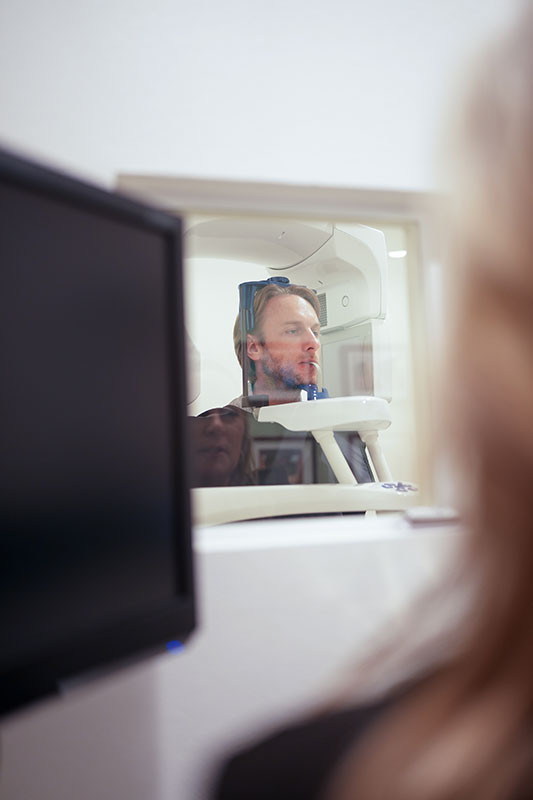
Why proper diagnosis matters
Not every lesion requires removal. Not every lesion is harmless.
Our responsibility is to:
- Evaluate carefully
- Biopsy when appropriate
- Partner with oral pathologists
- Provide clear guidance
Early detection and thoughtful management are critical.
- Our philosophy
Oral pathology requires vigilance, precision, and experience. We strongly believe in early detection, conservative management when appropriate and decisive treatment when necessary. Most lesions are benign. But when something is serious, identifying it early can make all the difference.
Frequently asked questions
Answers to the questions we hear most from patients.
Does a biopsy mean I have cancer?
No. Most biopsies result in benign diagnoses. A biopsy simply gives us certainty.